A live swipe file
The Lab Notes
Steal the story moves, marketing mechanics, and creative experiments worth carrying into your own work — built for Christians who want world-class craft without checking their convictions at the door.
Browse the drawers
Open a drawer. Steal one move. Get back to making.
Story & Structure — 4 specimens
Story & Structure

Steal it
DJI let GoPro validate the category, then took it
DJI used the GoPro mount for early validation, walked away when GoPro demanded two-thirds of profits, then shipped four drone generations in 30 months while GoPro's Karma failed.
WHY IT WORKED
DJI let a bigger player prove the market existed, then moved faster and committed harder than the company that opened the door.
STEAL THIS
Let someone else pay to prove your category is real. Then out-ship them.
Adapt it
Your biggest wins can make the reader feel smaller
A Christian entrepreneur told us that big-company success stories made sub-$2M founders struggle to see themselves in the story.
WHY IT WORKED
Scale can flatter the storyteller while quietly excluding the audience that most needs the lesson.
STEAL THIS
Pair relatable proof beside aspirational proof so every reader has a door in.
Steal it
Participation beats more content
Audiences raised on games increasingly want a role in the story, not another thing to watch.
WHY IT WORKED
A role creates ownership. Ownership creates word of mouth that a passive audience never generates.
STEAL THIS
Give the audience authorship somewhere in the story, even a small one.
Adapt it
The story is too big for the container
A veteran SaaS writer discovered that deep craft did not automatically transfer to ghostwriting. The skill was real, the container needed rebuilding.
WHY IT WORKED
Craft is portable. Format is not. Confusing the two stalls good writers in new formats.
STEAL THIS
Before doubting the craft, ask if the container itself needs rebuilding.
Words That Work — 4 specimens
Words That Work
Steal it
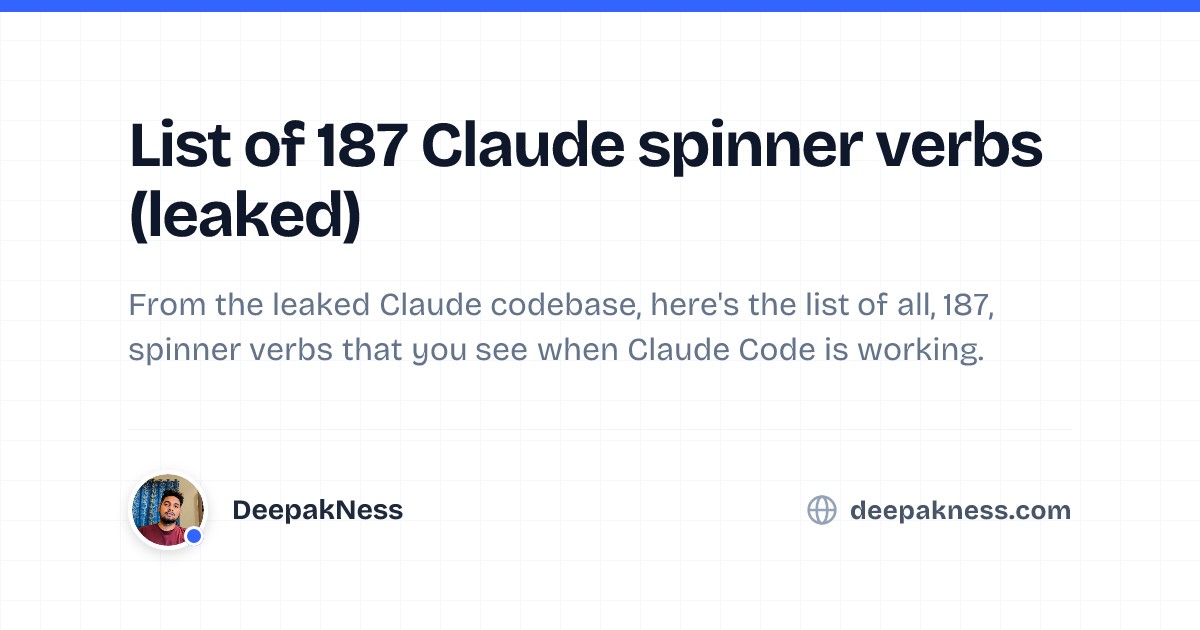
Claude Code has 187 words for thinking
Visible effort changes how people value an answer. The tool names the real work being done instead of faking a loading screen.
WHY IT WORKED
Naming a process signals competence. A generic spinner signals nothing.
STEAL THIS
Describe the actual work happening behind the scenes instead of a vague status message.
Adapt it
Anthropic is paying roughly $300K for a Standards Editor
The company selling writing automation still pays heavily for human taste, grammar, tone, and judgment.
WHY IT WORKED
Automation raised the floor. It did not remove the need for a human ear at the top.
STEAL THIS
Keep a human standards check on anything AI drafts before it reaches a reader.
Steal it
Anti-description makes the reader finish the picture
Sparse copy leaves a useful gap the reader fills from experience.
WHY IT WORKED
A reader's own imagination is more persuasive than any description you could supply.
STEAL THIS
Give imagination room to work. Cut the adjective and leave the gap.
Steal it
Proof multiplies every claim
A specific artifact, number, demonstration, or named example carries more weight than another adjective.
WHY IT WORKED
Adjectives ask to be believed. Proof lets the reader verify it themselves.
STEAL THIS
Replace one adjective in your next piece with one specific, checkable fact.
Marketing Mechanics — 4 specimens
Marketing Mechanics
Steal it
Domino's answered Sony in two hours
Sony's digital-only PlayStation announcement drew roughly 70,000 angry replies. Domino's UK posted a digital-pizza parody and earned about 488,000 likes.
WHY IT WORKED
Speed beat cleverness. The reply landed while the attention was still live.
STEAL THIS
Act within hours while attention is live, not days later.
Steal it
CeraVe volunteered for the joke
Fans teased Kevin Durant's dry skin, so CeraVe built a campaign around it. Reported results: a 43% sales lift, 4.1 billion PR impressions, and 83 million organic video views.
WHY IT WORKED
Joining a joke about yourself beats defending against it.
STEAL THIS
When the internet teases your brand, play along instead of getting defensive.
Adapt it
IKEA's orangutan became a global product moment
Zookeepers gave Punch the macaque a $19.99 Djungelskog toy. The organic moment drove sellouts, but IKEA's paid extension of the moment drew criticism.
WHY IT WORKED
Earned attention and engineered attention behave differently.
STEAL THIS
Know which one you're building before you spend money on it.
Steal it
Duolingo let the audience resurrect Duo
The death announcement reached about 120 million views. The campaign worked because fans helped write the return.
WHY IT WORKED
Co-authorship kept the audience invested in the outcome.
STEAL THIS
Let your audience help write the next chapter instead of just announcing it.
AI Without Losing Yourself — 4 specimens
AI Without Losing Yourself
ARTIFACT
"Thinking" became AI theater
Public GitHub had 59 thinking-indicator commits before 2023 and roughly 20,000 afterward; Claude Code alone uses 187 thinking verbs. Read more →
WHY IT WORKED
Watching a process feels like proof of quality, so products perform "thinking" to earn trust they haven't yet demonstrated.
STEAL THIS
Make visible effort specific, never fake it.
DANGER ZONE
Faking depth erodes trust faster than admitting a shortcut ever would.
ARTIFACT
Build a pricing page for robots
A plain-text /pricing.md gives agents plans, limits and billing without scripts to parse.
WHY IT WORKED
Agents can't scrape a slick marketing page the way humans do — plain facts remove the guesswork machines can't afford.
STEAL THIS
Publish clean, machine-readable facts alongside your human copy.
DANGER ZONE
A messy or bloated pricing.md confuses agents as much as no page at all.
ARTIFACT
Fifteen edits beat one vague image prompt
Change angle, lighting, expression, setting and framing one decision at a time. Read more →
WHY IT WORKED
Isolating one variable per pass gives you control that a single sprawling prompt can never produce.
STEAL THIS
Iterate in small, single-variable passes instead of one giant ask.
DANGER ZONE
Prompting all five changes at once collapses you right back into a vague ask.
ARTIFACT
The best AI safety grade was a C+
The 2026 AI Safety Index gave no frontier lab an A or B. Open the 2026 AI Safety Index →
WHY IT WORKED
No one's default settings are safe enough to trust blindly, grades included.
STEAL THIS
Write your red lines before defaults decide them for you.
DANGER ZONE
Don't wait for an industry consensus that never comes — set your limits now.
Dangerously Creative Christians — 4 specimens
Dangerously Creative Christians
ARTIFACT
Tolkien trusted story to carry the weight
He built a world so real that truth could arrive indirectly, without a single sermon.
WHY IT WORKED
Trust in the story lets truth travel further than a sermon would.
STEAL THIS
Let the world you build carry conviction instead of stating it outright.
DANGER ZONE
Don't bury the story under explanation.
ARTIFACT
C.S. Lewis made apologetics an adventure
He embodied his argument in characters, stakes, and wonder instead of a lecture.
WHY IT WORKED
Image and story outlast argument alone.
STEAL THIS
Embody your argument in characters, stakes, and wonder.
DANGER ZONE
Don't turn fiction into a lecture.
ARTIFACT
Dolly Parton didn't sand off the strangeness
She kept the detail others would edit out, and it became her edge.
WHY IT WORKED
Excellence doesn't require sanding off your distinctiveness.
STEAL THIS
Keep the detail others would edit out — distinctiveness is an asset.
DANGER ZONE
Don't perform eccentricity.
ARTIFACT
Bible Bricks lets the audience build the story
Participation converts spectators into co-creators.
WHY IT WORKED
Participation converts spectators into co-creators.
STEAL THIS
Give readers something to make, choose, or remix.
DANGER ZONE
Don't confuse gimmicks with agency.
Experiments From the Lab — 4 specimens
Steal it
One issue produced 55.7% opens and 3.41% verified clicks
The click rate ran 3.7x above the prior post.
WHY IT WORKED
Treating the newsletter as a lab and publishing real numbers builds trust the polish can't.
STEAL THIS
Publish your own receipts, not just your wins.
Adapt it
Longer fake loading created more sharing
Tom Orbach tested a 10-second loading state against roughly half a second of real work; the wait raised perceived effort.
WHY IT WORKED
Perceived effort changes value, but manufacturing a fake wait is a trust risk.
STEAL THIS
Lean toward honest specificity about real effort rather than fabricating delay.
Steal it
The Trust Stack keeps the machine from getting the last word
Begin with human intent, use AI through the middle of the process, finish with human judgment.
WHY IT WORKED
Bookending AI with human judgment keeps the work accountable.
STEAL THIS
Never let AI have the first or last word on something with your name on it.
Steal it
One owned destination can beat every news link combined
Christian Story Lab's own click data showed personal tools and resources out-pulled a bundle of external links.
WHY IT WORKED
An owned destination compounds in a way that borrowed attention doesn't.
STEAL THIS
Curate widely, but always be building one destination of your own.
YOU'VE REACHED THE EDGE OF THE PUBLIC BENCH
There are more specimens in the drawer.
Join Christian Story Lab to unlock the full Lab Notes library and get the newest breakdowns in your inbox. Already a subscriber? Log in with the email you use for the Lab and Beehiiv will let you through.
Free. No daily noise. Unsubscribe whenever you want.
